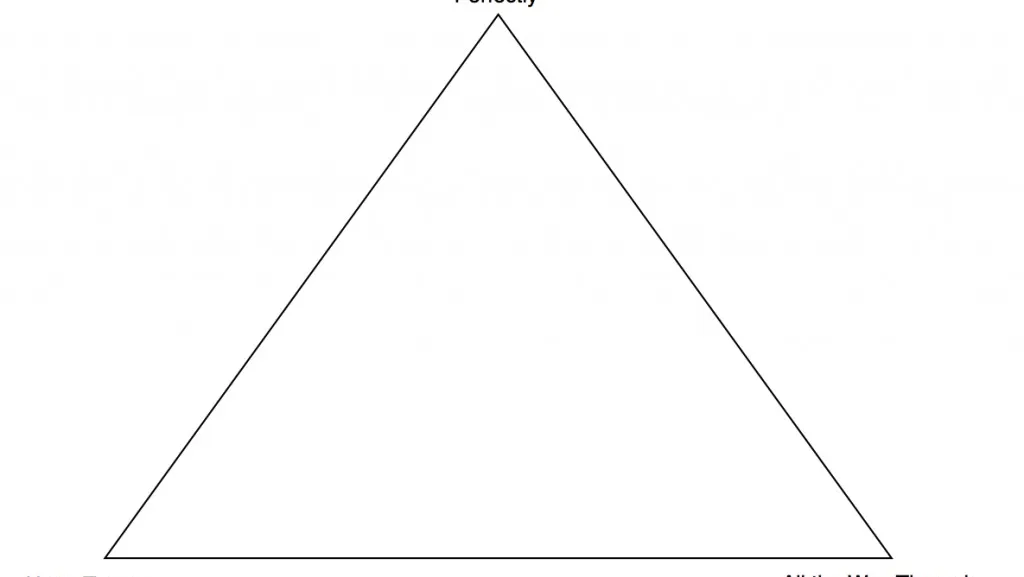
The practice triangle is a concept very similar to the project management triangle. The project management triangle outlines some constraints that you’ll have when working on a project. Simply stated it says:
Good, fast, cheap: pick two.
In other words, if you want something built well and quickly, then it’s not going to be cheap. Want something built well but for not a lot of money, then it’s going to take a long time. Fast and cheap, well it’s just not going to be good.
In the wonderful book effortless mastery by Kenny Werner, Kenny outlines ‘the practice triangle’. In this case, the three corners of the triangle are:
- Perfectly
- All The Way Through
- Up To Tempo
or as I like to think of them:
- How well you play the piece or excerpt.
- Length of excerpt
- Speed you play the excerpt.
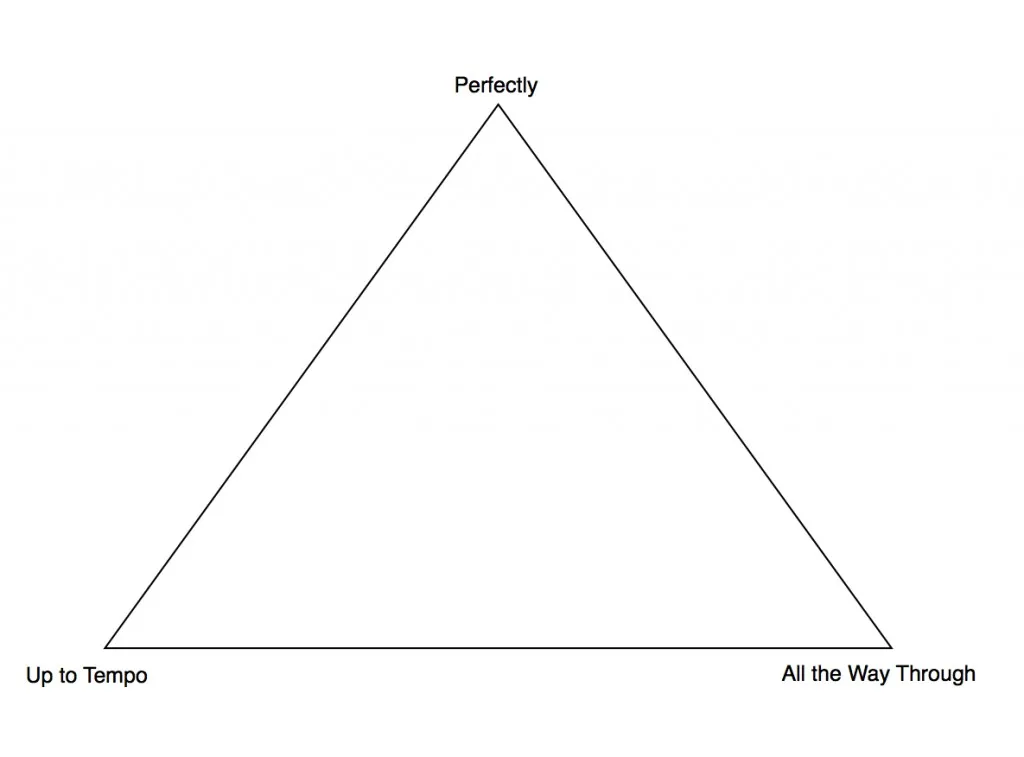
Like the production triangle from earlier, you get to pick two. If you play a long excerpt quickly, then it’s not going to be good. Play a short excerpt slowly, then the quality of the performance is going to be very good. I’m sure that you work out the other variations for yourself.
What Kenny suggests is that you practice using all of these variations to really help you get to know a piece well.
I strongly suggest that everyone practices small excerpts slowly. Slow and short is the most underused practice technique, particularly for beginners.
However, It can be helpful to have a quick and rough run through the whole piece just to get to know the whole thing. In much the same way that it’s really important to have repeated listenings of whatever piece that you’re working on. This helps you begin to subconsciously store the ‘map’ of the piece in your head.
At the end of repeatedly practicing a small segment slowly, it can be fun and useful to see how far you can push the tempo up also. Again, I’d like to reiterate that this should be a small bit of your practice, not the majority.
Try all of the variations you can think of in your practice. Not only will it help you find weak spots in what you’re working on, it will also spice up your practice a bit and keep it interesting.
Happy Practicing!
Andrew Farnham is the director of IMA Music Mentoring where he leads the Guitar Lessons team.
Book an introductory music lesson and start following your musical dreams.